SUMMER RASHES
Its summer time and, believe it or not, rashes are prevalent. I have chosen a few of the most common summertime rashes. Happy Reading!Rash 1: Fever and Rash
So, you made it through the winter/spring and thought for sure your toddler in daycare couldn't possibly get sick again! Your poor child now has had a fever of 103 for the past three days and this morning when you wake her she is finally happy and does not have a fever. Just when you think you can call the doctor and cancel that appointment you take off her pajamas and find this rash! Now what?
Fortunately, your child likely has a well known viral illness called Roseola.
Roseola is a viral illness caused by Human Herpes Virus 6 (don't let the word Herpes scare you, it is just the name of the virus and has no other implications or complications). Roseola affects children between 6 months and 3 years old with the most common age being between 7 months and 13 months. It can occur throughout the year but usually groups during seasons (like Summer).
Although Roseola can be spread via close contacts, most cases of roseola occur sporadically, without known exposure. If your child has been exposed but has never had Roseola, the average incubation period for HHV-6 is 9 to 10 days.
Fortunately, Roseola tends to follow the same timeline for everyone. Almost all children have three to five days of fever(up to 104) that resolves abruptly and is followed by development of a rash. The fever is often also accompanied by irritability, swollen lymph nodes, red ear drums, and decreased appetite. Due to the increased redness and fluid behind the ear drums with Roseola, a lot of kids are diagnosed with ear infections at the same time.
As the child's fever goes away, the rash typically starts on the neck and trunk and spreading to the face and extremities. The rash usually consists of small red bumps and is itchy. It will usually last for one to two days, but occasionally may come and go within two to four hours
As with most viruses, there is no treatment in this case. Most children with roseola recover spontaneously without any long term complications.
Rash 2: Itchy and Scratchy
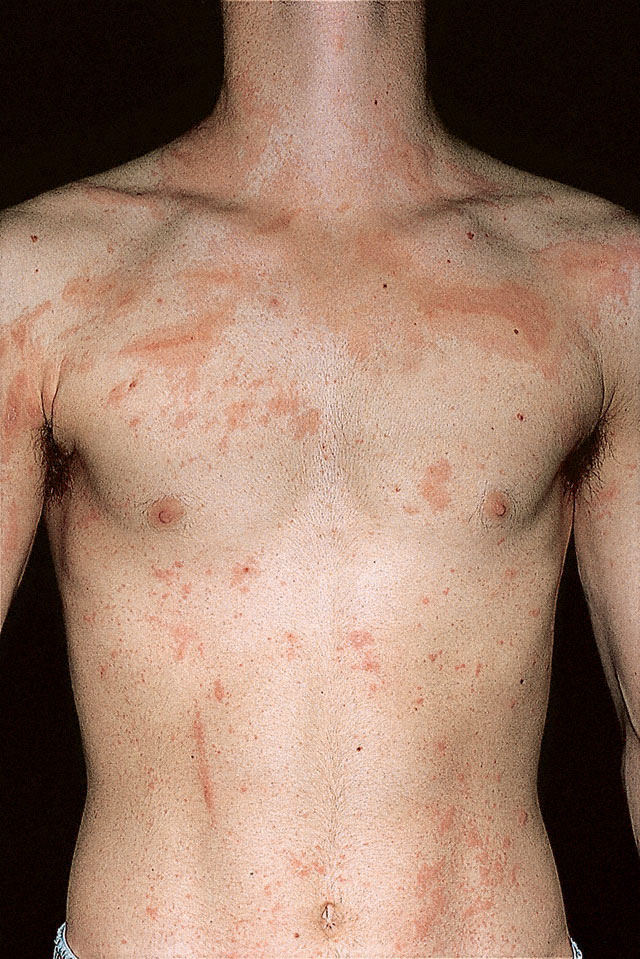
Despite the heat, you decide to take your children down to the park for some outdoor, energy wasting time. When you turn around, your kids decide to run into an nice shaded area under some trees to play. Since it is hot, you let them play in the nice shaded area. However, later that night, they all come running to you with a very itchy rash. What could it be?
Your guess...Poison Ivy!!
About, fifty percent of people will react to poison ivy in nature, and approximately 75 percent will react to skin testing with the chemical found in poinson ivy. Annually, an estimated 25 to 40 million Americans require medical treatment after exposure. Poison ivy dermatitis affects all ethnicities and skin types, and most geographical regions in the United States are at risk.
Most children (and adults) present with extreme itching and redness starting as early as 4 hours but up to 96 hours after exposure. After the initial redness, the rash then develops raised bumps and blisters that are often in a linear pattern. New lesions can present up to 21 days after exposure in previously unexposed individuals. Lesions present in different locations at different times after exposure based upon the amount of plant oil present and the skin thickness of the involved areas. This can give the impression that the poison ivy is spreading from one region to another. It is important to know that blister fluid does not cause spread and is not contagious. Occasionally, after the initial exposure, children continue to come in contact with the dried, black resin on contaminated clothing, pet fur or claws, gardening tools, or in crevices under the fingernails. This perpetuates the patient's dermatitis and puts their contacts at risk for developing an allergic reaction.
Without any treatment, the rash usually resolves in 1-3 weeks. The most common complication from poison ivy is a secondary bacterial infection from all the scratching.
If your child has been exposed, the best thing to do is to remove the contaminated clothing and gently wash(Vigorous scrubbing can make the rash worse) the skin with mild soap and water as soon as possible. One study found that after 10 minutes on the sking, 50% of the plant oil can still be removed but this number falls to 10% after 30 minutes and 0% after 1 hour.Washing is still important after that hour(especially under finger nails) in order to prevent a prolonged presentation.
So now that you know it is poison ivy, what do you do?
Your first line is going to be topical therapy. Soothing measures such as oatmeal baths and cool, wet compresses are anecdotally helpful. Topical treatment with compounds containing menthol and phenol (calamine lotion) may also provide symptomatic relief. Topical astringents such as aluminum acetate (Burow's solution) or aluminum sulfate calcium acetate (Domeboro®) used under occlusion may be useful to dry weeping lesions
Topical antihistamines(like Benadryl), anesthetics containing benzocaine, and antibiotics containing neomycin or bacitracin should be avoided because of their own allergenic potential.
Most parents will next reach for the bottle of Benadryl(or other antihistamine) to help with the itching. However, the itching in poison ivy dermatitis is not caused by histamine release. Relief from oral antihistamines is primarily due to the sedating effects of certain antihistamines. Therefore, your Benadryl may help calm your child down but won't resolve the itch.
Another great treatment is high-potency topical corticosteroids. These creams/lotions are most helpful early on. Once blisters are established these medicines aren't that helpful in preventing progression but many families believe they are helpful in relieving symptoms.
Finally, if all else fails (or the rash is in a bad area such as the face or genitals) oral steroids (like Prednisone)
can be used. If your child is having a severe reaction or the rash is in an area of concern, please make an appointment to be seen.
For the future, it may also help to teach your older childen(and yourselves) what to look out for in the woods and playgrounds. Below are pictures of the worse culprits.
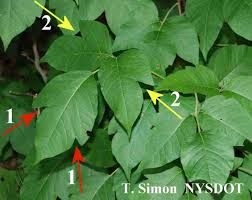
(poison ivy)

(poison oak)
can be used. If your child is having a severe reaction or the rash is in an area of concern, please make an appointment to be seen.
For the future, it may also help to teach your older childen(and yourselves) what to look out for in the woods and playgrounds. Below are pictures of the worse culprits.
(poison ivy)
(poison oak)
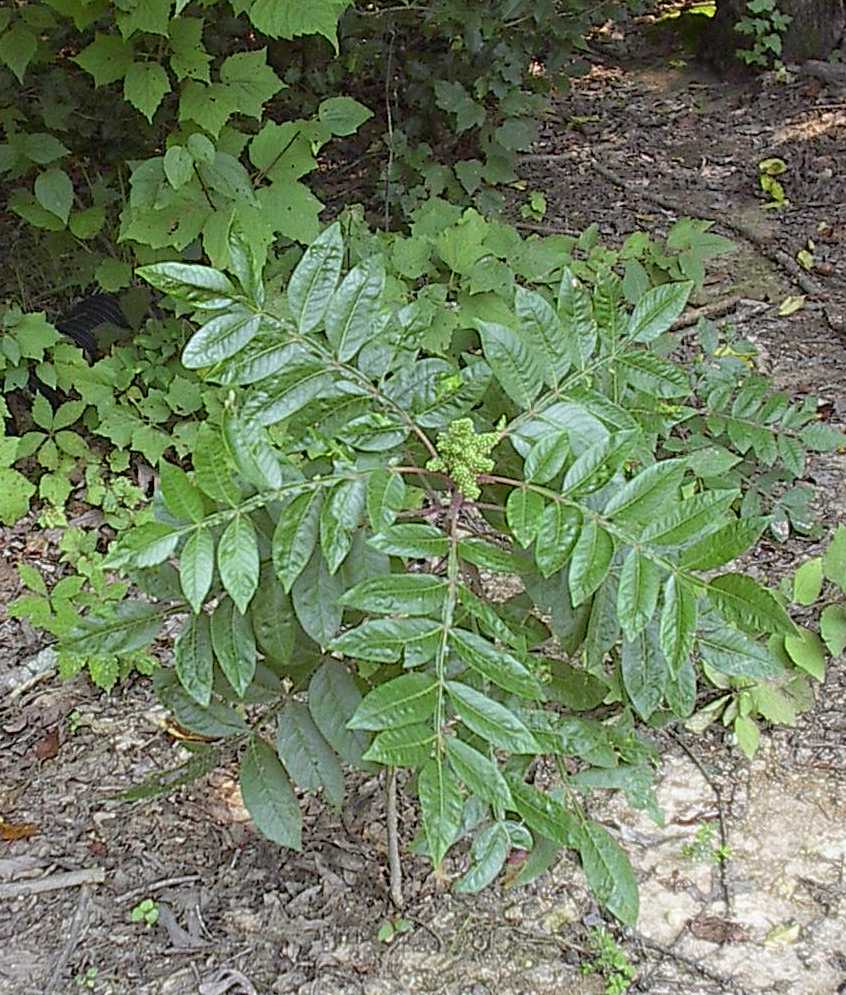
(poison sumac)
Rash 3: Red Bumps after a Hot Day

Like most new parents, you are so excited when you can finally take your newborn out for a walk You get out the stroller and sun umbrella and take a stroll in this wonderful July weather. Upon returning, however, you note the above rash all over your baby. Like any parent with a newborn you panic upon seeing this rash and call the doctor immediately. Your doctor tells you it is likely "prickly heat". Not wanting to sound like a new parent you say "ok, of course" and hang up the phone and ask yourself, what is "prickly heat".
First of all, you should NEVER worry about asking questions - we want you to ask, so please do :) Secondly, your baby likely does have a "heat rash" which is also known as "prickly heat" or "miliaria". Although this rash is very common in infants, it can affect adults too, so it might be worth checking your own skin.
Heat rash develops when your sweat ducts (or pores) become blocked and your sweat is trapped under your skin. This rash can range from small red bumps to blister and deep red lumps. Some forms of heat rash are also itchy.
Heat rash usually goes away on its own but you should call your doctor if your child has a fever, has increased pain, swelling, redness, or warmth around the affected area, or for any other concerns.
Rash 4: Spreading Itchy Bumps
Your 8 year old just comes in from a camping trip with his friends. He is scratching at his legs and tells you he has broken out in a rash. He is SURE he did not play in poison ivy. What could this be and what do you do now?
The answer here...Chiggers! (aka mites)
This rash is actually caused by the baby (larvae) mites. After hatching, the larvae wait on leaves or grass stems for a human to pass by. The baby mites typically can be found in grassy fields, forests, parks and gardens, and the moist areas along lakes and streams. In particular, most mites implicated in chigger bites require relative air humidity of at least 80 percent, and for this reason they are not often found on vegetation more than 20 to 30 cm above the ground surface.
When they encounter your unsuspecting child they attach to the skin. The larvae remain for a few days at the most and then drop to the ground to change into the harmless adults. They infest human skin through areas of easy access, such as the pant cuff or shirt collar and then often migrate widely on the skin in search of an optimal feeding area. Barriers to this migration ( such as a belt, an elastic waistband) often stop the wandering which explains why there is typically a clustering to bites along this area.
The mites pierce and attach to the skin with jaw-like structures and secrete digestive enzymes that liquify skin cells. After injecting digestive enzymes, the larvae ingest and feed upon broken down tissue. This breakdown of the skin(not the mite or its bite) is what causes the intense itchyness that is classical for chigger bites. Itching typically begins within hours after a bite and resolves over a few days; the lesions usually heal over one to two weeks. Occasionally, the rash (and itchiness) can persist for weeks. Most often, the rash is clustered on the legs and waistline.
In boys, the triad of penile swelling, pruritus, and dysuria has been referred to as "summer penile syndrome," and likely represents a local hypersensitivity response to chigger bites. Symptoms of summer penile syndrome last for a few days to a few weeks .
Treatment for chigger bites is typically aimed at managing symptoms. Although vigorous cleansing with soap and water may be helpful to remove the mites and prevent further spread, the mites themselves are not the causing the persistent itch.
Itching and inflammation can be treated with topical medicines such as menthol, calamine lotion, or potent topical steroids. Oral antihistamines, such as Benadryl, can also be used to help with the itching. In some studies, sedating antihistamines (such as Benadryl) were better than non-sedating (such as Claritin) in the treatment of the itchiness. Since the mites do not burrow into the skin and the pruritic eruption usually starts after the mites have already detached from the skin, treatment regimens directed at eradicating the mites from the skin, such as applying nail polish, are not indicated.
Clothing worn during the period of outdoor exposure to the mites should be washed in hot water or treated with pyrethroid insecticides to kill mites.
Just like with poison ivy, the key here is prevention! Preventive measures include avoiding heavily infested areas. If you travel to these areas, then trouser legs should be tucked inside socks. DEET (N, N-diethyl-meta-toluamide or N, N-diethyl-3-methylbenzamide) and dimethyl phthalate applied to skin and clothing are effective in repelling mites . Repellents containing naturally occurring aromatic oils, such as citronella oil, tea tree oil, jojoba oil, geranium oil, and lemon grass oil, have also been found to be effective .
Rash 5: Lyme Disease -
This is a topic all on its own, but I wanted to get the rash picture out there. If you see this rash, see your doctor immediately!

Note: All comments are welcome on the blog, but please do not post medical questions. I am, unfortunately, unable to respond to personal medical questions through this website. Thank you for understanding!
Legal Disclaimer: This blog is designed to provide general information related to pediatric and adolescent care. The information presented on this blog should not be construed as formal medical advice, nor does accessing this site constitute formation of a doctor (or other healthcare provider)-patient relationship. The content is intended solely for informational and not for treatment purposes. Do not use this site if you believe you may have a medical emergency; call 911 or your doctor's office immediately.

No comments:
Post a Comment
Note: All comments are welcome on the blog, but please do not post medical questions. I am, unfortunately, unable to respond to personal medical questions through this website. Thank you for understanding!